
Chevron v. Natural Resources Defense Council, or the “Chevron Case,” was a supreme court case held in 1984, brought forth by energy conglomerate Chevron against the Natural Resources Defense Council (NRDC), challenging the interpretation of the “Clean Air Act.”
In a unanimous 6-0 ruling, The Supreme Court stated, “A government agency must conform to any clear legislative statements when interpreting and applying a law, but courts will give the agency deference in ambiguous situations as long as its interpretation is reasonable” (Justia). Essentially, experts in the area of contention shall define the definition of unclear legal writing the subject pertains to. This legal standard has come to be known as the “Chevron deference,” a two-part legal doctrine that determines when a field-relevant specialist is to clarify ambiguity if and only if “the intent of Congress is unambiguous, or clearly stated, then the inquiry must end, Agencies must carry out the clearly expressed intent of Congress, and the decision of Congress was implicit, then so long as the agency’s interpretation is reasonable, a federal court cannot substitute its statutory construction superior to the agency’s construction.[3][4]” (Ballotpedia).
This doctrine became an integral framework to administrative law that allows for questions such as “What constitutes a dangerous level of heavy metal?”, “what makes a product safe for external use?” or “What makes an organism an endangered species?” to be clarified by experts in federal agencies such as the FDA, EPA, and SEC, rather than designating that power to federal judges, including The Supreme Court.
On January 17, 2024, the Supreme Court heard joint oral arguments in Loper Bright Enterprises v. Raimondo and Relentless v. Department of Commerce. Both relate to fisheries and their autonomy from the National Marine Fisheries Service imposing regulations on privately owned fisheries. Both plaintiffs are upset with “Chevron’s Ubiquity” in legal and judicial sectors, arguing that it violates the separation of powers and is unworkable with the modern legal climate.
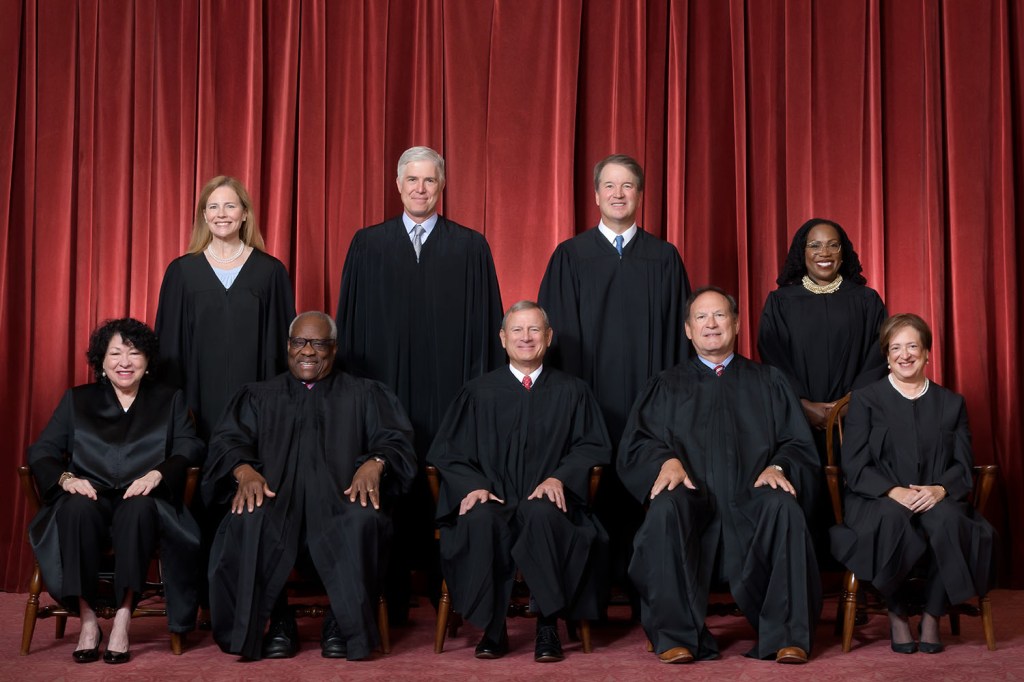
Despite the seemingly valid arguments of Supreme Court plaintiffs, these cases are essentially another power grab, with significant appeal to the conservative and partisan Supreme Court majority. If Chevron is overturned, agencies with public interest are at imminent risk; the power dynamic will be returned to a state of federal judges having nearly absolute defining power of legal writings, by proxy putting the stability of federal agencies integral to American society at risk.
So, how worried should you be? The short answer is that you should be concerned but not panicked. The Supreme Court has ignored Chevron and its two-part process, but lower courts continue to rely heavily on it.
However, the main point of perturbation is that judges can interpret the grey area of laws about niche topics such as the approval of medications, designation of protected wildlife areas, and more, despite not being educated or trained in these sectors, only boasting law degrees.
Ultimately, your worry should stem from the exponential rate of Supreme Court absolutism and corruption; from the overturning of Roe v. Wade to the ominous suggestion to revisit cases that legalized both gay and interracial marriage, the Supreme Court is on a rampage to secure their interests before the people’s, of which they are meant to serve.
The problem with the Supreme Court is not the conservative majority but the rampant partisanship, only voting in favor of cases brought forth by the justice’s prospective party members, and deep connection to the upper echelon, failing to disclose the lavish gifts financed by businessmen involved in sectors that certain justices continue to bulwark.

 The Scribe Circle
Leave a comment